Imagine a world where cancer is detected by a simple blood test years before a tumor forms, where personalized medicines are printed at your local pharmacy based on your unique DNA, and where climate change is mitigated by bacteria engineered to consume carbon dioxide. This is not the distant realm of science fiction; it is the tangible, accelerating future being forged in the laboratories of today’s biotechnologists. We are standing at the precipice of a profound transformation, a revolution powered by biotechnology that promises to redefine the very boundaries of life, health, and our planet’s sustainability. This revolution transcends mere incremental advances; it represents a fundamental convergence of biology with digital technologies, artificial intelligence, and engineering, poised to reshape every facet of human existence.
The narrative of biotechnology is evolving from one of specialized medicine to a pervasive force driving innovation across industries. This article will delve deep into the core frontiers of this revolution, exploring the groundbreaking technologies set to redefine our world, the immense opportunities they present, and the critical ethical and practical challenges we must navigate to harness their power responsibly.
A. The Core Pillars of the Next Biotech Revolution
The next wave of biotech innovation is not reliant on a single technology but on the powerful synergy between several groundbreaking fields. Understanding these core pillars is essential to grasping the full scope of the coming changes.
A. Next-Generation Genomics and Personalized Medicine
The completion of the Human Genome Project was just the opening chapter. Today, genomics has evolved into a dynamic, real-time tool for understanding health and disease.
-
CRISPR and Beyond: While CRISPR-Cas9 rightfully garnered a Nobel Prize for its gene-editing prowess, its successors are already emerging. Techniques like base editing and prime editing offer even greater precision, allowing scientists to change a single DNA ‘letter’ without breaking the DNA strand, reducing the risk of unintended errors. This opens the door to correcting devastating genetic disorders like sickle cell anemia and Huntington’s disease at their root cause.
-
Multi-Omics Integration: Genomics is no longer operating in isolation. Scientists are now integrating data from proteomics (the study of proteins), transcriptomics (the study of RNA molecules), and metabolomics (the study of metabolic products). By layering this information, we can build a comprehensive, systems-level view of human biology, revealing how genes, environment, and lifestyle interact to create disease or maintain health.
-
The Era of Truly Personalized Medicine: The one-size-fits-all model of medicine is becoming obsolete. With advanced genomics, treatments can be tailored to an individual’s genetic makeup. This means pharmacogenomics determining which drugs will be most effective and which might cause adverse reactions based on a patient’s genome will become standard practice, increasing efficacy and saving lives.
B. The Rise of Synthetic Biology and Engineered Life
If genomics is about reading and editing the book of life, synthetic biology is about writing entirely new chapters. This field applies engineering principles to biology, designing and constructing new biological parts, devices, and systems.
-
Designing from the Ground Up: Scientists are not just modifying existing organisms; they are creating synthetic genomes from scratch. This allows for the design of microbes with specialized functions, such as producing life-saving drugs, breaking down industrial pollutants like microplastics, or manufacturing sustainable biofuels with极高的 efficiency.
-
Programmable Cells as Living Therapeutics: We are entering an era where a cell can be a drug. CAR-T cell therapy, where a patient’s own immune cells are engineered to hunt down cancer, is a prime example. The future holds even more sophisticated “living medicines,” including engineered bacteria that can reside in the gut to diagnose and treat inflammatory diseases or deliver therapeutics directly to tumors.
-
Bio-Fabrication and Sustainable Production: Imagine growing building materials, weaving spider-silk-strong textiles, or producing leather in a lab without harming an animal. Synthetic biology makes this possible. By programming yeast or bacteria to produce specific proteins and materials, we can create a new, circular bio-economy that is decoupled from fossil fuels and environmentally destructive practices.
C. The Confluence of AI and Big Data in Biology
Biology is generating data at an unprecedented, almost incomprehensible scale. Making sense of this “biological big data” is impossible for the human mind alone, which is where Artificial Intelligence (AI) and machine learning step in.
-
Accelerating Drug Discovery: The traditional drug discovery process is slow, expensive, and fraught with failure. AI algorithms can now analyze vast databases of molecular structures, predict how they will interact with target proteins in the body, and identify the most promising drug candidates in a fraction of the time and cost. This is dramatically shortening the pipeline from the lab to the clinic.
-
Predictive Diagnostics and Digital Twins: AI models can be trained on medical images, genomic data, and electronic health records to identify subtle patterns that escape human observation. This can lead to AI systems that predict an individual’s risk of developing Alzheimer’s, heart disease, or diabetes years in advance. The concept of a “digital twin” a virtual, AI-powered replica of a patient will allow doctors to simulate treatments and outcomes before ever administering them to the real person.
-
Decoding Biological Complexity: Machine learning is helping us unravel the most complex biological systems, such as the human brain. By mapping neural connections and modeling brain activity, AI is providing insights into neurological disorders and paving the way for new treatments.
D. The Integration of Biotechnology with Advanced Hardware
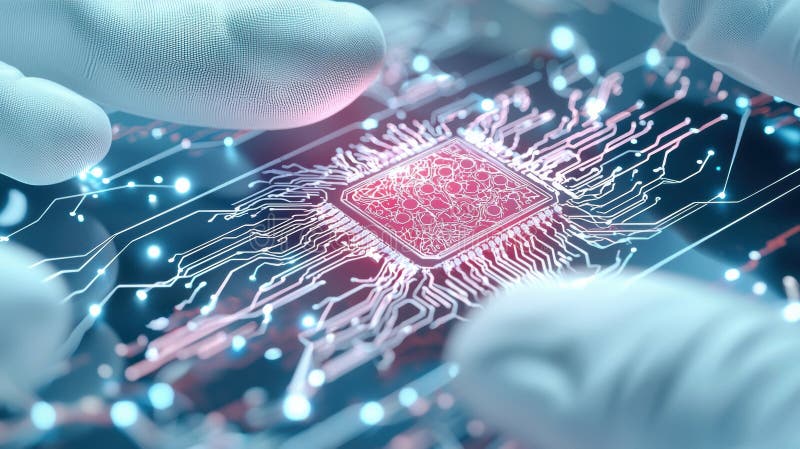
The biotech revolution is not confined to wet labs; it is increasingly powered by sophisticated hardware that bridges the digital and biological worlds.
-
Wearable and Implantable Biosensors: The future of healthcare is continuous and proactive. Wearable devices that monitor blood glucose, electrolytes, and even specific biomarkers for disease are already here. Soon, implantable nanosensors will circulate in the bloodstream, providing real-time health analytics and alerting users and their doctors to potential health issues long before symptoms appear.
-
Organ-on-a-Chip Technology: This innovation involves growing human cells in micro-engineered devices that mimic the structure and function of human organs. These tiny, complex systems can be used to test drug safety and efficacy more accurately than animal models, potentially revolutionizing pharmaceutical testing and paving the way for personalized drug screening.
-
Bioprinting Tissues and Organs: 3D bioprinting is advancing from creating simple tissues to constructing complex, vascularized organ structures. While printing a fully functional, transplantable human heart is still on the horizon, bioprinted tissues are already being used for drug testing and disease modeling. This technology holds the ultimate promise of solving the organ transplant shortage by creating custom-made organs from a patient’s own cells, eliminating the risk of rejection.
B. Sector-Specific Transformations: How Biotech Will Reshape Industries
The impact of these biotechnological advancements will ripple across the global economy, transforming core industries in its wake.
A. Healthcare and Medicine: From Treatment to Prevention
The entire paradigm of healthcare is shifting from a reactive model (treating illness after it occurs) to a predictive and preventive one.
-
Liquid Biopsies for Early Cancer Detection: Companies are developing blood tests that can detect trace amounts of cancer DNA shed by tumors, potentially identifying cancers at stage I or even before they are visible on scans. This could dramatically increase survival rates for many deadly cancers.
-
Gene Therapies for Inherited and Chronic Diseases: We are moving beyond treating symptoms to offering potential cures for genetic diseases. Gene therapies for inherited blindness, spinal muscular atrophy, and hemophilia are already approved, with hundreds more in development for conditions like cystic fibrosis and muscular dystrophy.
-
Regenerative Medicine and Anti-Aging: Research into stem cells, telomeres, and senolytic drugs (which clear aged, dysfunctional cells) is opening up the possibility of genuinely regenerating tissues and combating age-related decline. The goal is not necessarily immortality, but rather extending “healthspan” the number of years we live in good health.
B. Agriculture and Food Security: Engineering a Sustainable Harvest
Feeding a growing global population in the face of climate change is one of humanity’s greatest challenges. Biotechnology offers powerful tools to create a more resilient and productive food system.
-
Climate-Resilient Crops: Using gene editing, scientists are developing crops that can withstand drought, flooding, salinity, and extreme temperatures. This is crucial for ensuring food security in regions most vulnerable to climate change.
-
Precision Fermentation and Alternative Proteins: The production of animal-based proteins is a major driver of greenhouse gas emissions. Precision fermentation uses engineered microbes to produce real milk proteins, egg whites, and other animal products without the animal. This, combined with the rise of cultured meat (grown from animal cells), promises to create a more ethical and environmentally sustainable protein supply.
-
Reducing Agricultural Footprint: Bio-engineered crops can be designed to require less water and fertilizer and to be resistant to pests and diseases, drastically reducing the need for chemical pesticides and preserving biodiversity.
C. Industrial Biotechnology and Environmental Remediation
This field, often called “white biotechnology,” uses living cells and enzymes to create industrial products and processes that are more efficient and less polluting.
-
Bio-Remediation: Engineering microbes to consume oil spills, digest plastic waste in oceans and landfills, or detoxify heavy metals from contaminated soil is a powerful strategy for cleaning up planetary pollution.
-
Green Chemistry: Replacing petroleum-based feedstocks with biological ones to produce plastics, solvents, textiles, and chemicals. These bio-based products are often biodegradable and have a much lower carbon footprint.
-
Carbon Capture and Utilization: A particularly exciting frontier is the engineering of algae, bacteria, or plants to capture atmospheric carbon dioxide more efficiently and convert it into useful products like biofuels, bioplastics, or even building materials, turning a greenhouse gas into a resource.
C. Navigating the Challenges: The Ethical, Social, and Economic Implications
With such transformative power comes profound responsibility. The biotech revolution will force us to confront difficult questions that we must address as a global society.
-
A. The Equity and Access Dilemma: Will these revolutionary therapies and technologies be available only to the wealthy, exacerbating existing health and social disparities? Ensuring equitable access is a monumental challenge of policy, economics, and global cooperation.
-
B. The Ethical Quagmire of Genetic Engineering: The ability to edit the human germline (sperm, eggs, embryos) raises the specter of “designer babies,” where genetic enhancements could be used for non-therapeutic purposes, creating a new form of social inequality. International consensus and robust regulatory frameworks are urgently needed.
- C. Data Privacy and Security: The collection of genomic and health data on a massive scale creates a treasure trove for hackers and a potential tool for discrimination by employers or insurers. Ensuring the privacy and security of this most intimate data is paramount.
-
D. Biosecurity Risks: The same tools used for good could potentially be misused to create engineered pathogens. Strengthening global biosecurity protocols and fostering a culture of responsibility among scientists is critical to preventing catastrophic misuse.
-
E. Environmental Impact of Engineered Organisms: What are the long-term ecological consequences of releasing genetically modified or synthetic organisms into the environment? Rigorous, long-term environmental impact assessments are essential.
Conclusion: Shaping a Conscious and Collaborative Future
The future of biotechnology is not a predetermined path; it is a landscape of possibilities that we are actively creating. The innovation revolution it promises holds the potential to solve some of humanity’s most intractable problems disease, famine, and environmental degradation. However, realizing this optimistic future requires more than just scientific brilliance. It demands a concerted, global effort involving scientists, ethicists, policymakers, and the public to engage in open dialogue, establish clear ethical guidelines, and build inclusive regulatory structures.
The choices we make today about funding, regulation, and education will determine whether this revolution becomes a force for universal betterment or a source of deeper division. By approaching this powerful technology with wisdom, foresight, and a shared commitment to the common good, we can steer the biotechnology revolution toward a future that is not only more technologically advanced but also more healthy, sustainable, and equitable for all.