
In the vast, often chaotic digital landscape of the 21st century, few phenomena are as ubiquitous and culturally potent as the internet meme. For many, memes are simply a source of quick humor—a way to share a laugh, express a relatable feeling, or comment on current events through a familiar template. They are the inside jokes of the global village, fleeting and often nonsensical. However, to dismiss them as mere digital ephemera is to overlook a profound and powerful force shaping our world. Beneath the layers of satire and absurdity lies a powerful engine for real-world technological innovation, driving advancements in fields as diverse as artificial intelligence, finance, marketing, and product design.
This article will delve deep into the unexpected and symbiotic relationship between the seemingly trivial world of memes and the serious business of technological progress. We will explore how the unique properties of viral content are not just byproducts of technology but active catalysts, pushing developers, corporations, and entrepreneurs to adapt, evolve, and create new tools to harness, manage, and monetize this unpredictable digital energy.
Deconstructing the Meme: More Than Just a Joke
To understand how memes drive innovation, we must first move beyond a simplistic definition. Coined by evolutionary biologist Richard Dawkins in his 1976 book The Selfish Gene, the term “meme” originally described a unit of cultural transmission an idea, behavior, or style that spreads from person to person within a culture. The internet meme is the digital-age incarnation of this concept. It is a piece of content, typically an image, video, phrase, or hashtag, that is copied, adapted, and spread rapidly by internet users.
What makes a meme a powerful agent of change are its core characteristics:
A. Virality and Velocity: Memes can travel across the globe in a matter of hours, reaching audiences of millions. This unprecedented speed of dissemination creates immediate, massive-scale behavioral phenomena.
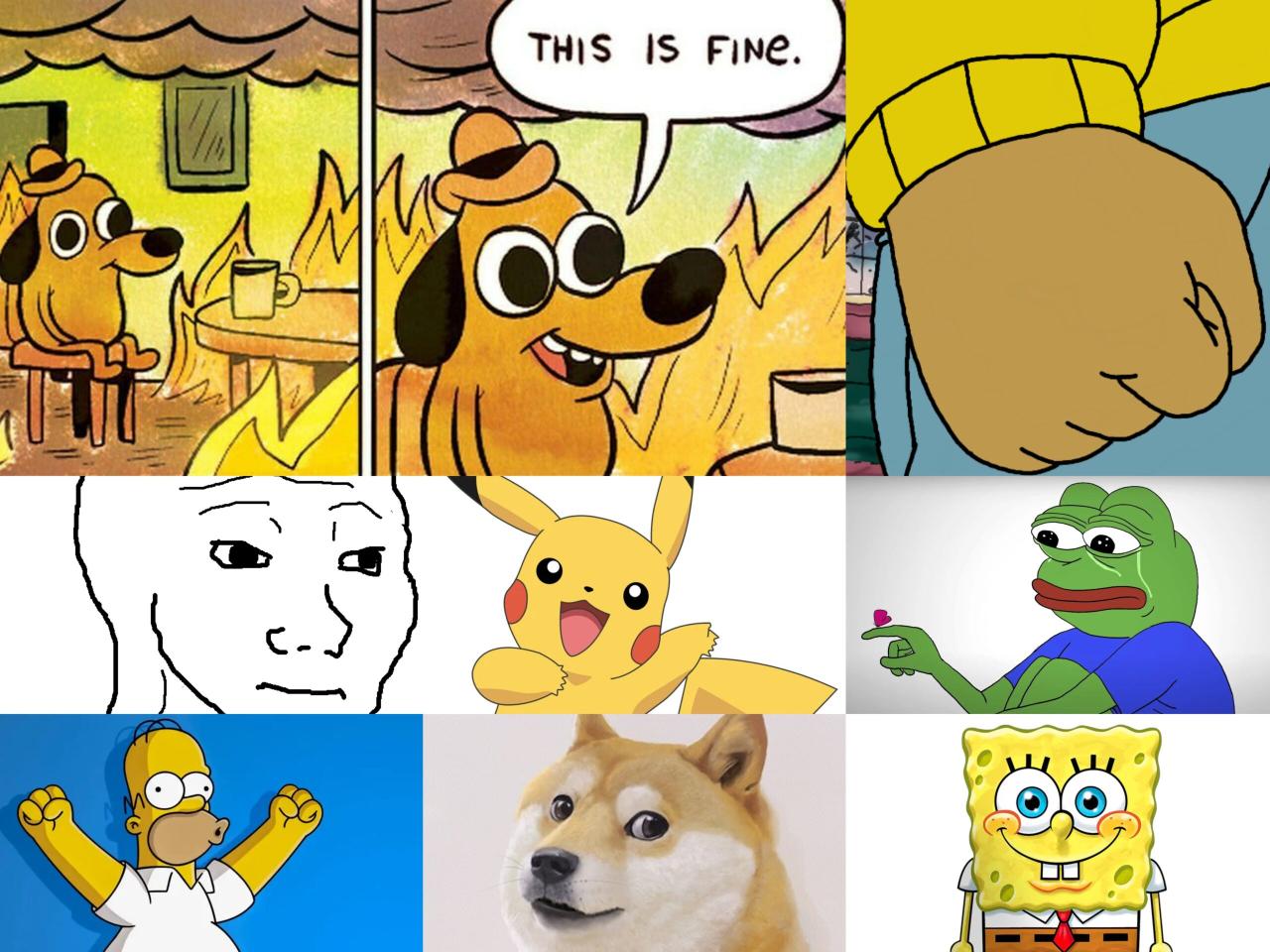
B. Adaptability and Remix Culture: The “Remix” is the heart of meme culture. A single template, like the “Distracted Boyfriend” or “Woman Yelling at a Cat,” can be repurposed for countless contexts, from politics to software development. This demands platforms and tools that support this iterative, user-driven content creation.
C. Community and Shared Identity: Memes often serve as shibboleths, creating in-groups and out-groups. Understanding a niche meme signifies belonging to a specific community, whether it’s for gamers, crypto-enthusiasts, or K-pop fans. This drives the need for specialized digital spaces.
D. Emotional Resonance and Engagement: Memes distill complex emotions and situations into a instantly digestible format. This high level of emotional engagement is a metric that platforms and advertisers desperately seek to capture and quantify.
It is these very characteristics that create a “problem” in the most productive sense a set of challenges that the tech industry is compelled to solve, thereby leading to innovation.
The Innovation Engine: Key Areas Transformed by Meme Culture
The influence of memes is not confined to our social media feeds. Their impact reverberates through the core pillars of the modern tech industry, forcing adaptation and inspiring groundbreaking new tools.
A. Artificial Intelligence and Machine Learning
The chaotic, visual, and context-heavy nature of memes presents a monumental challenge for artificial intelligence. Understanding a meme requires not just object recognition, but cultural literacy, sarcasm detection, and an understanding of social nuance. This difficulty has made memes a fascinating and demanding frontier for AI research.
-
The Meme as an AI Benchmark: For years, image recognition AI was trained on straightforward datasets of cats, dogs, and everyday objects. Memes, with their layered text and imagery, are the next level. Tech giants like Google and Facebook (Meta) invest heavily in AI that can not only identify the components of a meme but also interpret its meaning and intent. This drives development in Natural Language Processing (NLP) and computer vision, as systems must learn to correlate textual phrases with visual context to grasp humor or criticism.
-
Content Moderation at Scale: The dark side of memes includes their use for harassment, the spread of misinformation, and the coordination of extremist groups. The same adaptability that makes memes fun also makes them a nightmare for automated content moderation systems. A hateful ideology can be hidden behind a seemingly innocuous image macro. This has spurred massive investment in more sophisticated, context-aware AI moderators that can detect harmful patterns and evolving visual languages of abuse, pushing the boundaries of what automated systems can achieve in understanding human communication.
-
AI-Powered Meme Generation: We are now seeing the emergence of AI tools that can generate memes. From GPT-3 writing humorous captions to DALL-E 2 and Midjourney creating the underlying images, the meme creation process is being automated. This not only provides a new creative tool for users but also serves as a real-world test for generative AI’s ability to understand and replicate cultural trends.
B. The Financial Markets and Cryptocurrency
Perhaps the most dramatic example of memes driving real-world impact is in the financial sector, where online communities have demonstrated the power to move markets.
-
The GameStop Saga and “Meme Stocks”: In early 2021, a collective of retail investors on the subreddit r/WallStreetBets orchestrated a short squeeze on GameStop (GME) stock. This was not driven by traditional financial analysis but by a shared meme-fueled narrative a “war” against wealthy hedge funds. The “To the Moon!” rocket emojis, the “Diamond Hands” mantra, and the iconic image of a cartoon chimp became the symbols of a movement that cost institutional investors billions and triggered congressional hearings. This event forced a fundamental re-evaluation of the power of decentralized online communities and exposed vulnerabilities in the financial system, leading to new regulations and a surge in development of trading platforms like Robinhood that cater to this new demographic.
-
Cryptocurrency and NFT Hype Cycles: The entire cryptocurrency and NFT (Non-Fungible Token) space is inextricably linked to meme culture. Dogecoin, created as a joke based on the “Doge” meme, evolved into a multi-billion dollar asset, championed by figures like Elon Musk. New tokens and NFT projects live and die by their ability to generate “hype” and a sense of community through memes. The success of projects like the Bored Ape Yacht Club is as much about their status as a meme-able status symbol as it is about their underlying technology. This has accelerated innovation in blockchain infrastructure, wallet security, and decentralized finance (DeFi) platforms to support the massive, meme-driven influx of users and capital.
C. Marketing, Advertising, and Brand Strategy
The old model of top-down, corporate advertising is dying. Meme culture has fundamentally rewritten the rules of engagement between brands and their audiences.
-
The Demand for Authenticity: Consumers, particularly younger generations, are adept at spotting inauthentic marketing. A brand trying to clumsily appropriate a meme often faces immediate backlash and becomes the subject of mocking memes itself. This has forced a paradigm shift in marketing departments. Instead of creating campaigns, the new goal is to “participate in the conversation.” This requires real-time social listening tools, agile content creation teams, and a willingness to relinquish some brand control.
-
Real-Time Marketing and Agile Content Creation: The shelf-life of a meme is often less than 48 hours. To be relevant, brands must react with incredible speed. The famous “Oreo Dunk in the Dark” tweet during the 2013 Super Bowl blackout was an early example of this. Today, brands like Netflix, Wendy’s, and Gucci have built entire social media personas around witty, meme-savvy engagement. This has driven the development of sophisticated social media management suites (like Sprout Social or Hootsuite) that allow for rapid approval and posting, and has created a new niche for “meme manager” roles within companies.
-
User-Generated Content (UGC) as a Driver of Product Development: When a meme involves a product, it provides a massive, unsolicited focus group. For instance, the viral “Tide Pod Challenge” forced Procter & Gamble to launch a public safety campaign. Conversely, when a product like the “Instant Pot” or a specific brand of seltzer water becomes a meme within wellness or cooking communities, it provides invaluable market validation and free advertising. Companies are now developing strategies to actively monitor and encourage positive UGC and meme creation, using it as direct feedback for product iteration and development.
D. Platform Development and User Interface (UI) Design
The very tools we use to create and share memes have been shaped by the demands of meme culture.
-
The Rise of Integrated Editing Tools: The first memes required users to have basic knowledge of image editing software like Photoshop. Recognizing the demand, social platforms began integrating simpler tools. Facebook added text-overlay features, Instagram developed its “Stories” format with a suite of drawing and text tools, and TikTok built an entire ecosystem around easy video editing, green screen effects, and sound syncing. These features, now standard, were direct responses to the user desire to easily remix and create content.
-
The “Shareability” Imperative: The architecture of modern social media is designed for one thing: sharing. The “Retweet,” “Share,” and “Repost” buttons are the circulatory system of the meme ecosystem. The algorithms that prioritize content with high engagement are perfectly tuned to propel viral memes to the top of our feeds. The continuous refinement of these algorithms to maximize user time-on-platform is, in part, a refinement of the meme-distribution mechanism.
-
The Ascendancy of Visual-First Platforms: The meme revolution is a visual revolution. The success of platforms like Instagram, Snapchat, and TikTok over their more text-based predecessors (like early Twitter or blogs) underscores this shift. This has pushed all tech companies to prioritize visual and video content, influencing UI/UX design across the web to be more image-centric, scroll-friendly, and instantly gratifying.
Case Study: The Unlikely Journey of the “Distracted Boyfriend” Meme
To illustrate this innovation pipeline in action, let’s trace the impact of a single meme: the “Distracted Boyfriend” stock photo.
-
Origin: A generic stock photo from a Spanish agency.
-
Virality: It became a universal template for expressing desire for something new while being committed to something else.
-
Demand for Tools: Its popularity created a need for easy-to-use meme generators where users could simply input three text boxes over the pre-loaded image.
-
Marketing Adoption: Brands worldwide used it to humorously promote new products, demonstrating their cultural awareness.
-
AI Challenge: The meme became a test case for AI’s ability to understand complex social dynamics (attraction, infidelity, distraction) from a single image with text.
-
Cultural Impact: It entered the global lexicon, demonstrating how a simple image can become a shorthand for a complex psychological concept. This demonstrated to tech developers the power of visual communication, further validating investment in visual-based AI and platforms.
The Future: What’s Next for Meme-Driven Innovation?
The relationship between memes and technology is a feedback loop. As technology creates new ways to make and share memes, memes, in turn, reveal the limitations and possibilities of that technology, pushing it forward. Looking ahead, we can anticipate several key trends:
A. Memes in the Metaverse: As virtual and augmented reality platforms develop, memes will evolve from 2D images to 3D interactive experiences. Imagine a viral dance not just as a TikTok video, but as an avatar emote everyone uses in a virtual world, driving development of motion-capture tech and virtual asset marketplaces.
B. AI-Human Co-Creation: The future of meme creation will likely be a collaboration between human wit and AI generation tools, leading to even more rapid and personalized meme cycles.
C. Decentralized Meme Ownership: Blockchain technology could allow for the “minting” of original meme templates, creating a new model for crediting and even monetizing viral content for its creators.
D. Advanced Predictive Analytics: Companies will invest more in AI that can not just understand existing memes but predict emerging trends, allowing brands and investors to get ahead of the next viral wave.
Conclusion: The Digital Heartbeat of Progress
The journey of the internet meme from a digital pastime to a catalyst for technological innovation is a powerful testament to the unpredictable nature of human creativity. They are not a distraction from serious technological work; they are the crucible in which it is being tested. Memes function as a relentless, real-time, global focus group, stress-testing our AI, reshaping our financial systems, forcing brands to be more human, and dictating the features of our most powerful communication platforms.
They prove that culture and technology are not separate spheres but are deeply intertwined. The next time you chuckle at a silly cat meme or share a relatable template with a friend, remember that you are participating in a powerful cultural force a digital heartbeat that is actively pulsing through the veins of our technological future, driving it forward in ways we are only just beginning to understand.