Gazing into the crystal ball of technological progress is more than a pastime for science fiction enthusiasts; it is a critical exercise for businesses, governments, and individuals preparing for a future that is accelerating towards us at an unprecedented pace. The next ten years promise not merely incremental upgrades but a fundamental reshaping of our reality, driven by convergences between fields like artificial intelligence, biotechnology, and quantum physics. Predicting tomorrow’s tech innovations requires us to look beyond the hype cycles and identify the foundational shifts that will redefine industries, economies, and the very fabric of human experience. This in-depth exploration ventures beyond simple gadget forecasts to map the core technological vectors that will disrupt and define the coming decade.
A. The Foundational Engine: Pervasive and Sentient Artificial Intelligence
Artificial Intelligence is no longer an emerging technology; it is the bedrock upon which the next wave of innovation will be built. We are rapidly moving from Narrow AI, designed for specific tasks, towards more general and pervasive forms of intelligence that will become an invisible, omnipresent utility.
A. The Rise of Ambient and Context-Aware Computing
AI will retreat from the foreground of our screens and blend seamlessly into our environment. Instead of asking a smart speaker for the weather, your environment will proactively adjust. Imagine walking into your home, and the lighting, temperature, and background music auto-configure based on your biometric data (e.g., stress levels inferred from your gait or voice tone) and personal calendar. This ambient intelligence, powered by a distributed network of low-power sensors and edge-computing AI, will create hyper-personalized, adaptive living and working spaces that anticipate needs before we consciously express them.
B. Generative AI’s Evolution into Creative Partners and Innovators
The current explosion in generative AI for text, images, and code is just the prelude. The next stage involves these models evolving from mere content generators into true collaborative partners. We will see the emergence of multi-modal AI systems that can simultaneously process and connect information from text, audio, visual, and sensory data streams. An architect could describe a building concept in natural language, and the AI would not only generate blueprints and 3D models but also run structural simulations, perform environmental impact analyses, and source sustainable materials all in real-time. This will democratize complex design and engineering, breaking down disciplinary silos.
C. The Autonomous Economy: Self-Optimizing Systems
Beyond self-driving cars, we are entering the era of the autonomous economy. AI agents will manage vast swathes of global supply chains, logistics networks, and financial markets with minimal human intervention. These are not simple automation scripts; they are adaptive systems capable of negotiating with each other, predicting disruptions from geopolitical events or weather patterns, and dynamically re-routing resources to optimize for efficiency, cost, and sustainability. This will lead to unprecedented economic resilience but will also necessitate new frameworks for accountability and oversight in a world where critical decisions are made by algorithms.
B. The Biological Revolution: Redefining Human Potential and Health
The convergence of biology and technology is set to transform healthcare from a reactive model to a proactive, personalized, and predictive one, while also challenging our definitions of human capability.
A. The Era of Hyper-Personalized and Predictive Medicine
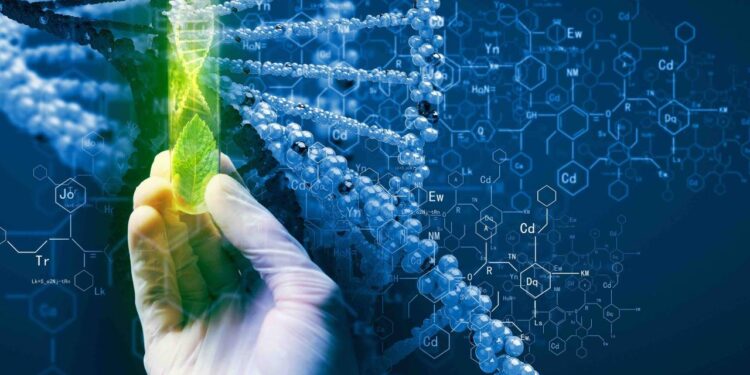
The one-size-fits-all approach to medicine is on its way to obsolescence. The integration of AI with multi-omics (genomics, proteomics, metabolomics) and continuous biometric monitoring will enable a revolution in personalized care. Your doctor will no longer treat you based on population averages but on a dynamic, digital twin of your physiology. This virtual model will simulate how you will respond to a specific drug, a dietary change, or a new exercise regimen, allowing for interventions long before a disease manifests. Liquid biopsies simple blood tests that can detect cancerous DNA fragments will become standard annual check-up procedures, catching cancer in its earliest, most treatable stages.
B. Gene Editing 2.0: From Correction to Enhancement
While CRISPR-Cas9 brought gene editing to the forefront, next-generation tools like base editing and prime editing offer greater precision and safety. The conversation will gradually shift from curing rare genetic disorders to addressing more complex, polygenic conditions like heart disease and Alzheimer’s. Furthermore, the field of regenerative medicine will advance dramatically. 3D bioprinting of functional tissues and even simple organs (like skin grafts or blood vessels) will move from labs to clinical trials, addressing the critical shortage of organ donors and offering new hope for burn victims and transplant patients.

C. Brain-Computer Interfaces: The Final Frontier
Neuralink and other companies in the BCI space are pioneering a direct communication channel between the human brain and digital world. The initial applications are rightly focused on restoring function to individuals with spinal cord injuries or neurodegenerative diseases, allowing them to control robotic limbs or communicate through thought alone. Looking ahead a decade, the technology could evolve to enable more profound applications, such as memory augmentation, direct brain-to-brain communication, or seamless control of complex machinery. The ethical, security, and philosophical implications of this are immense, raising questions about identity, privacy, and what it means to be human.
C. The Quantum Leap: Solving the Previously Unsolvable
Quantum computing is often misunderstood as just a “faster computer.” Its true potential lies in its ability to solve classes of problems that are fundamentally intractable for even the largest supercomputers of today.
A. Revolutionizing Drug Discovery and Materials Science
Classical computers struggle to simulate molecular interactions at a quantum level. This is why drug discovery is a slow, expensive process of trial and error. Quantum computers will be able to model the behavior of complex molecules with perfect accuracy, allowing researchers to design new drugs, catalysts, and materials from first principles. We could see the rapid development of new proteins for targeted cancer therapies, efficient catalysts for carbon capture to combat climate change, or novel materials for room-temperature superconductors that would revolutionize energy transmission.
B. Unbreakable Encryption and the Threat to Current Security
This power comes with a significant threat. Quantum computers will be capable of breaking the widely used RSA encryption that secures our online transactions, communications, and government secrets. This has spurred the critical field of post-quantum cryptography the development of new encryption algorithms that are resistant to quantum attacks. The next decade will be a race to implement these new standards across the global digital infrastructure before powerful enough quantum computers arrive, in what is often called the “Q-day” scenario.
C. Optimization at a Planetary Scale
Beyond science, quantum algorithms are exceptionally good at solving complex optimization problems. This capability can be applied to global challenges. We could optimize worldwide logistics and supply chains to minimize fuel consumption and waste, manage national power grids by balancing energy from diverse renewable sources in real-time, or develop hyper-efficient financial models for risk assessment. The impact on efficiency and sustainability could be profound.
D. The Sustainable Tech Imperative: Innovation for a Livable Planet
Confronting climate change and environmental degradation is the defining challenge of our time. Technology will be the primary tool in this fight, moving beyond mere mitigation to active restoration.
A. The Ascendancy of Green Energy and Storage
The transition to renewables will accelerate with next-generation solar and wind technologies. Perovskite solar cells, for instance, promise higher efficiencies and lower production costs than traditional silicon. However, the true game-changer lies in energy storage. Solid-state batteries will offer higher energy density, faster charging, and improved safety for electric vehicles and grid storage. Meanwhile, research into gravity storage, flow batteries, and green hydrogen will provide the long-duration storage solutions needed to power a civilization entirely on intermittent renewable sources.
B. The Circular Economy Powered by AI and IoT
The linear “take-make-dispose” model of consumption is unsustainable. The future lies in a circular economy, where waste is designed out of the system. AI and the Internet of Things (IoT) will be the enablers. Smart sensors in products will track their condition and usage, allowing for predictive maintenance and optimal timing for refurbishment. At end-of-life, AI-powered robotic disassembly lines will sort and recover valuable materials with high purity, creating a closed-loop system for everything from smartphones to automobiles.
C. Climate Engineering and Carbon Capture
As the planet continues to warm, we will likely see a serious push towards climate engineering, or geoengineering. This includes controversial techniques like Solar Radiation Management (injecting reflective particles into the atmosphere to block sunlight). A less risky and more critical area is Direct Air Capture (DAC). Innovations in material science, particularly metal-organic frameworks (MOFs), are making it increasingly feasible to pull CO2 directly from the atmosphere at a large scale. This captured carbon can then be sequestered underground or, more promisingly, upcycled into synthetic fuels, plastics, or even building materials, creating a new carbon-negative industrial ecosystem.
E. The Immersive and Interconnected World: Blending Physical and Digital Realities
The way we interact with information and with each other is on the verge of a paradigm shift, moving beyond the flat screen into immersive, 3D environments.
A. The Spatial Web and the Metaverse Evolution
The concept of the “metaverse” is often conflated with virtual reality. Its more profound iteration is the Spatial Web or Web 3.0 an interconnected set of digital layers overlaid onto our physical world. Accessed through AR glasses and eventually neural interfaces, it will allow digital information, objects, and avatars to interact seamlessly with our real environment. You could have a persistent digital artwork in your living room, follow a virtual navigation arrow painted on the street, or collaborate with a colleague’s hologram on a 3D model of a car engine. This requires a fusion of technologies: 6G networks for bandwidth, AI for spatial understanding, and blockchain for digital ownership and identity.
B. The Proliferation of Autonomous Systems and Robotics
Autonomy will extend far beyond the passenger car. We will see the proliferation of autonomous drones for last-mile delivery, agricultural monitoring, and infrastructure inspection. In warehouses and factories, robots will evolve from performing single, repetitive tasks to working collaboratively with humans, adapting to new tasks through AI demonstration. In our homes, advanced domestic robots will handle not just vacuuming but also complex chores like loading dishwashers, folding laundry, and assisting the elderly with mobility, significantly impacting the healthcare and service industries.
C. The Hyperconnected Planet: 6G and Ambient IoT
The rollout of 5G is laying the groundwork, but 6G, expected around 2030, will be a true leap. It promises not just faster speeds but integrated sensing, communication, and AI. It will enable the “Internet of Senses,” transmitting tactile and olfactory information digitally. Furthermore, it will power the “Ambient IoT,” where trillions of tiny, low-cost, battery-free sensors can be embedded in everything from food packaging to clothing, creating a truly real-time, digital representation of the entire physical world. This will provide an unimaginable volume of data to optimize everything from retail inventory to urban planning.
Navigating the Inevitable: Challenges and Ethical Imperatives
This breathtaking pace of innovation does not come without profound challenges. As a society, we must proactively address these issues to ensure technology serves humanity, not the other way around.
A. The Pervasive Data Privacy and Security Dilemma
As our lives become more quantified and interconnected, the amount of personal data generated will be astronomical. The potential for surveillance, manipulation, and catastrophic data breaches grows exponentially. We will need robust, decentralized data ownership models, likely built on blockchain or similar technologies, where individuals have sovereign control over their digital identities and can grant granular permissions for data usage.
B. The Deepening Chasm of Economic and Digital Inequality
Technological disruption has always created winners and losers. The coming wave could dramatically widen the gap between the skilled and the unskilled, and between technologically advanced nations and the developing world. A critical focus must be on global education reform, lifelong learning, and social safety nets to manage the transition. Ensuring equitable access to life-saving technologies like personalized medicine is a moral imperative.
C. The Existential Question of Superintelligence and Control
As AI systems become more capable and autonomous, the long-debated problem of AI alignment becomes urgent. How do we ensure that a highly intelligent AI system’s goals remain perfectly aligned with human values and ethics? This is not a plot for a sci-fi movie but a active area of research for leading AI labs. Establishing international norms, safety protocols, and governance frameworks for advanced AI is perhaps the most critical challenge of the 21st century.
Conclusion: A Future Shaped by Our Choices Today
The technological landscape of 2030 and beyond will be almost unrecognizable from today’s. It will be a world where our health is managed predictively by AI, our environment is interactive and augmented, our economies are run by autonomous systems, and our very biology is programmable. These predictions are not fantasies; they are logical extrapolations of current research trajectories. The ultimate outcome, however, is not predetermined by the technology itself. It will be shaped by the ethical choices, regulatory frameworks, and inclusive policies we implement today. By understanding these coming disruptions, we can collectively steer this powerful wave of innovation towards a future that is not only more advanced but also more equitable, sustainable, and profoundly human.