
For decades, space was the exclusive domain of sovereign nations, a high-stakes arena for geopolitical competition and scientific discovery. The narrative was simple: governments built rockets, trained astronauts, and footed the astronomical bill. However, a profound and irreversible shift has occurred. The 21st century has ushered in the era of space commerce, a dynamic sector where private enterprise is not just a contractor but a primary driver of innovation, ambition, and economic expansion. We are no longer merely visiting space; we are learning to live, work, and create a sustainable economic ecosystem beyond Earth’s atmosphere. This article delves deep into the next innovation wave set to redefine the commercial space industry, moving beyond basic launch services to a complex, multi-trillion-dollar economy in the making.
From Government-Led to Commercially-Driven: The Paradigm Shift
The turning point can be traced to a combination of technological maturation, visionary leadership, and policy changes. The retirement of the Space Shuttle program created a vacuum that NASA deliberately filled with a new strategy: to become a customer, not a builder, for routine space transportation. This Commercial Crew and Cargo program empowered companies like SpaceX and Orbital Sciences (now Northrop Grumman) to develop their own spacecraft. The success of this model proved that private companies could innovate faster and at a lower cost. The result was the dramatic reduction in launch expenses, primarily through the development of reusable rocket technology, which has served as the foundational catalyst for the entire modern space economy. This democratization of access has opened the floodgates for a diverse array of businesses, from startups to established tech giants, to envision a future in orbit.
A. The Foundational Layer: The Revolution in Launch Services
The first wave of modern space commerce was dominated by the quest for cheaper, more reliable access to space. This layer remains the critical bedrock upon which all other sectors depend.
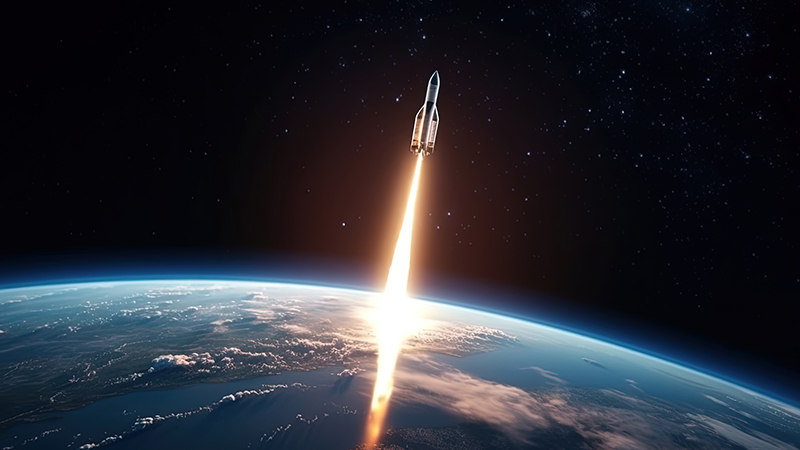
A.1. Reusability as a Game-Changer: The single most significant innovation in recent history has been the successful implementation of reusable rocket boosters. SpaceX’s Falcon 9 and Falcon Heavy rockets, with their now-routine landings on drone ships and landing zones, have fundamentally altered the economics of spaceflight. By reflying the most expensive parts of the rocket, costs have plummeted. This is akin to the difference between building a new airliner for every transatlantic flight versus refueling and maintaining a single aircraft for thousands of journeys. Other players, like Rocket Lab with their Electron rocket and planned Neutron rocket, and Blue Origin with their New Glenn vehicle, are following suit, making reusability the industry standard rather than an exception.
A.2. Proliferation of Launch Vehicles: The market is no longer a duopoly. We are witnessing an explosion of new launch providers catering to different niches. Companies like Firefly Aerospace and Astra are focusing on the small satellite market, offering dedicated, agile launches. Relativity Space is pioneering 3D-printed entire rockets, promising unprecedented speed and flexibility in manufacturing. This diversification ensures competition, drives down prices further, and provides tailored solutions for a wide range of customer needs, from launching a single cubesat to deploying massive constellations.
A.3. The Emergence of Heavy-Lift and Super-Heavy-Lift Capabilities: The next step in launch services is the development of rockets with colossal payload capacities. SpaceX’s Starship, designed to be fully reusable, promises to be the most powerful launch vehicle ever created. Its ability to carry over 100 metric tons to orbit will make previously unthinkable missions feasible, such as large-scale orbital habitats, crewed missions to Mars, and massive infrastructure projects. This capability is not just an incremental improvement; it is a quantum leap that will unlock the next tier of space commerce.
B. The Data Sphere: The Unsung Engine of the Space Economy
While rockets capture the public’s imagination, the most immediate and lucrative commercial activity in space is the generation, collection, and analysis of data. The Earth Observation (EO) and remote sensing sector has become a powerhouse of practical applications.
B.1. Advanced Earth Observation and Analytics: A new generation of high-resolution, hyperspectral, and radar satellites is orbiting Earth, providing a constant, real-time stream of data about our planet. The value is no longer in the raw images but in the sophisticated analytics applied to them. Companies like Planet Labs and Spire Global operate vast constellations that monitor global supply chains by tracking ships and trucks, assess crop health for precision agriculture, detect methane leaks for climate change mitigation, and provide critical data for insurance and financial modeling. This sector turns the “big picture” of Earth from space into actionable business intelligence.
B.2. The Next-Generation of Global Connectivity: The race to provide global broadband internet from space is one of the most capital-intensive and transformative endeavors in modern history. SpaceX’s Starlink, Amazon’s Project Kuiper, and OneWeb are deploying mega-constellations of thousands of small satellites in Low Earth Orbit (LEO). The implications are staggering. This technology promises to bridge the digital divide by connecting rural and remote communities, provide low-latency connectivity for financial trading and online gaming, and ensure robust communication for aviation and maritime industries. The success of these constellations is creating its own ecosystem, driving demand for user terminals, ground station networks, and specialized software.
C. The Orbital Economy: Manufacturing, Servicing, and Logistics
This is where the space economy evolves from being purely data-centric to becoming physically industrial. The unique conditions of space microgravity, vacuum, and extreme temperatures offer unparalleled opportunities for manufacturing and research.
C.1. In-Orbit Servicing and Assembly (IOSA): Currently, a satellite that runs out of fuel or suffers a malfunction becomes expensive, hazardous space debris. The emerging field of IOSA aims to change that. Companies like Northrop Grumman’s SpaceLogistics with its Mission Extension Vehicles (MEVs) are already demonstrating the ability to dock with and refuel or reposition aging satellites, dramatically extending their operational lives. The next step is on-orbit assembly, where components launched on multiple rockets are assembled in space to create structures too large to launch in one piece, such as larger telescopes or future space stations.
C.2. Manufacturing in Microgravity: The microgravity environment of space enables the production of materials, pharmaceuticals, and tissues that are impossible to create on Earth.
-
Advanced Alloys and Fibers: Without gravity-driven convection and sedimentation, metals can be mixed more uniformly, and ZBLAN glass fibers can be drawn with far fewer imperfections, potentially revolutionizing high-speed internet cables and medical imaging devices.
-
Pharmaceuticals and Bioprinting: Protein crystals grown in space are often larger and more perfectly ordered, aiding in drug discovery. Bioprinting companies are experimenting with printing human tissues and organs in microgravity, where they can form complex structures without collapsing under their own weight. Companies like Varda Space Industries are building entire facilities in space to manufacture products and then return them to Earth.
C.3. Space Debris Remediation and Active Cleanup: As the orbital environment becomes more congested, the threat of space debris grows. This problem has spawned a new commercial sector focused on sustainability. Startups like Astroscale and ClearSpace are developing technologies to actively capture and de-orbit defunct satellites and rocket stages. This is not just an environmental service; it is a critical utility for protecting valuable orbital assets, and it is likely that future satellite operators will be required by regulation or insurance to have a disposal plan, creating a steady market for these services.
D. Beyond Orbit: The Dawn of Cis-lunar and Deep Space Commerce
The commercial sphere is expanding beyond the immediate vicinity of Earth, looking towards the Moon and deeper into space. This represents the most ambitious and long-term frontier.
D.1. The Lunar Economy: NASA’s Artemis program, with its Commercial Lunar Payload Services (CLPS) initiative, is actively fostering a commercial market on and around the Moon. Companies like Intuitive Machines, Astrobotic, and Firefly Aerospace are competing to deliver scientific and commercial payloads to the lunar surface. The long-term vision involves utilizing local resources, a concept known as In-Situ Resource Utilization (ISRU). The primary target is water ice, believed to be trapped in permanently shadowed craters at the Moon’s poles. This water can be split into hydrogen and oxygen to create rocket propellant, effectively turning the Moon into a cosmic gas station for missions to Mars and beyond.
D.2. Space Tourism and Habitation: Once the stuff of science fiction, space tourism is now a reality. Blue Origin and Virgin Galactic have pioneered suborbital flights, offering minutes of weightlessness and breathtaking views. The next phase is already beginning, with SpaceX’s Crew Dragon facilitating orbital missions for private astronauts to the International Space Station (ISS). Looking ahead, companies like Axiom Space are building the first commercial space station modules, which will initially attach to the ISS before forming a standalone private station. These habitats will serve as destinations for government astronauts, corporate researchers, and private citizens, creating a sustainable market for human spaceflight.
D.3. Asteroid Mining: The Ultimate Long-Term Play While still a distant prospect, the potential for extracting resources from Near-Earth Asteroids (NEAs) is immense. These celestial bodies are rich in precious metals like platinum, cobalt, and nickel, as well as water. The technological and economic hurdles remain formidable, but the sheer value of these resources ensures that research and early-stage prospecting missions will continue. The first steps will likely involve characterizing asteroid compositions and demonstrating small-scale extraction techniques, paving the way for a future where space resources fuel a solar-system-wide economy.
E. The Enabling Ecosystem: The Unsung Heroes of the Space Age
Behind the headline-grabbing rocket launches and satellite deployments lies a complex and vital support ecosystem.
E.1. Ground Segment and Data Infrastructure: The vast amounts of data generated in space are useless without the infrastructure to receive, process, and distribute it. This has led to a boom in building global networks of ground stations and developing cloud-based platforms, like AWS Ground Station and Microsoft Azure Orbital, that allow satellite operators to manage their assets and process data without building their own expensive infrastructure.
E.2. Financing, Insurance, and Regulation: The growth of the space economy is underpinned by capital. Venture capital, private equity, and public markets are increasingly investing in space startups. As the asset value in orbit grows, so does the need for sophisticated space insurance to cover launch failures and in-orbit anomalies. Furthermore, a clear and adaptive regulatory framework is essential for managing spectrum allocation, licensing launches, and ensuring safe and sustainable operations.

Conclusion: An Ecosystem of Unprecedented Opportunity
The next wave of innovation in space commerce is not a single trend but a synergistic convergence of multiple sectors. The plummeting cost of access is enabling the data revolution, which in turn funds the development of in-orbit services, which will be essential for constructing the infrastructure needed for a sustained human presence on the Moon and beyond. We are transitioning from an era where space was a destination for flags and footprints to one where it is a domain for factories, hotels, and fuel depots. The challenges from technical hurdles and funding gaps to the pressing issue of space sustainability are significant. However, the momentum is undeniable. The commercial space industry is poised for exponential growth, promising not only astronomical financial returns but also profound advancements for humanity, securing our future as a multi-planetary species and unlocking the limitless potential of the final frontier.