We are living through one of the most profound technological shifts in human history. A force, once confined to the realms of science fiction, is now fundamentally recalibrating the very fabric of our economies, societies, and daily lives. This force is Artificial Intelligence (AI). Beyond being a mere tool or a incremental improvement, AI stands as the cornerstone of disruptive digital innovation, dismantling established industries, birthing entirely new markets, and redefining the boundaries of what is possible. This article delves deep into the multifaceted impact of AI, exploring how it is not just changing the game but creating entirely new playing fields. We will journey through its transformative effects on business operations, its symbiotic relationship with other cutting-edge technologies, the ethical quandaries it presents, and the future it is relentlessly forging.
A. Deconstructing Disruption: AI’s Core Mechanic of Change
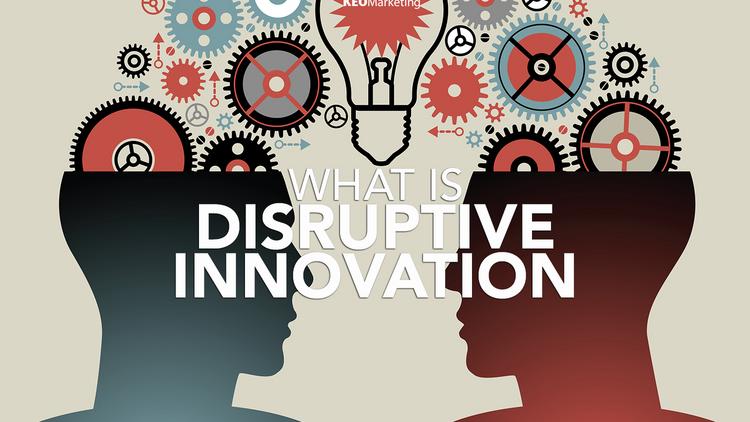
To understand AI’s impact, we must first move beyond the hype and grasp the fundamental mechanics of how it drives disruption. Disruptive innovation, a term coined by Clayton Christensen, describes a process by which a smaller company with fewer resources successfully challenges established incumbent businesses. AI is the ultimate catalyst for this process.
At its heart, AI, particularly its subset machine learning (ML), excels at pattern recognition, prediction, and automation at a scale and speed incomprehensible to humans. This capability allows new entrants and forward-thinking incumbents to:
-
Radically Lower Costs: AI automates complex, knowledge-based tasks that were previously immune to automation, from legal document review to financial fraud analysis.
-
Create Unprecedented Personalization: AI algorithms can analyze vast datasets of user behavior to deliver hyper-personalized experiences, products, and services, creating new value propositions.
-
Optimize Complex Systems: From global supply chains to city-wide traffic flows, AI models can identify inefficiencies and optimize for outcomes in real-time, delivering performance leaps.
-
Accelerate Innovation Cycles: AI-driven simulation and generative design can drastically shorten research and development timelines, from designing new drugs to creating novel material structures.
This potent combination allows AI-powered entities to offer “good enough” solutions at a lower cost or superior solutions that redefine market expectations, thereby disrupting incumbents who are locked into legacy systems and traditional business models.
B. The Corporate Metamorphosis: AI in Business and Industry
The corporate landscape is the most visible battlefield of AI-driven disruption. No sector remains untouched, and the pace of change is only accelerating.
A. Revolutionizing Customer Experience and Engagement
The frontline of AI interaction for most consumers is in customer service. AI-powered chatbots and virtual assistants have evolved from simple scripted responders to sophisticated conversational agents using Natural Language Processing (NLP). They provide instant, 24/7 support, handle routine inquiries, and seamlessly escalate complex issues to human agents. Furthermore, recommendation engines, like those pioneered by Amazon and Netflix, are AI-driven profit centers. By analyzing purchase history, browsing patterns, and similar user profiles, they drive significant revenue increases through cross-selling and up-selling, while simultaneously enhancing user satisfaction.
B. The Data-Driven Decision-Making Revolution
Gone are the days of executive intuition being the primary driver of strategy. AI and ML models can sift through terabytes of structured and unstructured data from sales figures and social media sentiment to IoT sensor readings to uncover hidden correlations, predict market trends, and identify nascent risks. This enables leaders to move from reactive decision-making to a proactive, predictive model. For instance, in finance, AI algorithms can detect fraudulent transaction patterns in milliseconds, saving billions. In marketing, they can optimize ad spend in real-time across channels to maximize return on investment (ROI).
C. The Hyper-Efficiency of Automated Operations
Robotic Process Automation (RPA) was the first wave, automating rule-based digital tasks. When infused with AI, it becomes Intelligent Process Automation (IPA), capable of handling unstructured data, making judgment calls, and learning from outcomes. This is transforming back-office operations in HR (resume screening, onboarding), finance (invoice processing, compliance reporting), and supply chain management (autonomous inventory forecasting, dynamic routing). This not only cuts operational costs but also frees up human capital to focus on more strategic, creative, and complex problem-solving tasks.
D. The New Frontier: Product and Service Innovation
AI is not just improving existing products; it is enabling entirely new categories. Consider the rise of autonomous vehicles, which are essentially data centers on wheels. They rely on a complex symphony of AI models for computer vision, sensor fusion, and path planning. In healthcare, AI is powering diagnostic tools that can detect cancers in medical imagery with an accuracy rivaling or surpassing trained radiologists. Generative AI models, like GPT-4 and DALL-E, are now creating original written content, art, and music, opening up new frontiers for the creative industries and content marketing.

C. The Symbiotic Symphony: AI and Other Transformative Technologies
AI’s disruptive power is magnified exponentially when it converges with other foundational technologies. It acts as the “brain” that gives these technologies strategic direction and intelligence.
A. AI and the Internet of Things (IoT): The Intelligent Nervous System
The IoT connects billions of physical devices to the internet, generating a constant stream of data. On its own, this data is a deluge of noise. AI is the filter and the analyst. In a smart factory, AI algorithms analyze data from sensors on machinery to predict equipment failure before it happens, scheduling maintenance and avoiding costly downtime (predictive maintenance). In smart agriculture, AI analyzes data from soil sensors, drones, and satellites to optimize irrigation and pesticide use, boosting yields and conserving resources.
B. AI and Blockchain: Towards Trusted Autonomy
While Blockchain provides a decentralized, tamper-proof ledger, AI provides the analytical muscle to make sense of the data stored within it. This powerful combination can create self-auditing supply chains where every step of a product’s journey is immutably recorded and automatically verified by AI for authenticity and compliance. In finance, this can lead to more transparent and efficient smart contracts that can execute and verify themselves based on AI-analyzed external data.
C. AI and Cloud Computing: The Democratization of Intelligence
Cloud computing platforms (like AWS, Google Cloud, and Microsoft Azure) have been the great democratizer of AI. They provide the vast, scalable computational power and storage required to train and run complex AI models. This has placed powerful AI tools into the hands of startups and small businesses, allowing them to compete with tech giants without making massive upfront investments in infrastructure. The cloud is the engine room of the AI revolution.
D. AI and 5G: The Catalyst for Real-Time Revolution
The high bandwidth and ultra-low latency of 5G networks are the perfect conduit for AI. This synergy is critical for applications requiring instantaneous decision-making. For example, in autonomous vehicles, 5G allows cars to communicate with each other and with traffic infrastructure (V2X) in real-time, with AI processing this information to prevent accidents and optimize traffic flow. It also enables complex AI models to run on mobile devices with minimal delay, enhancing augmented reality (AR) experiences and mobile gaming.
D. Navigating the Ethical Labyrinth of Widespread AI Adoption
With great power comes great responsibility. The breakneck speed of AI adoption has surfaced a host of critical ethical and societal challenges that must be addressed proactively.
A. The Algorithmic Bias and Fairness Conundrum
AI models are only as unbiased as the data they are trained on. Historical data often contains societal and human biases. If an AI system for hiring is trained on data from a company that historically favored a certain demographic, it will learn to perpetuate that bias. This can lead to discriminatory outcomes in critical areas like lending, criminal justice, and employment. Combating this requires a concerted effort in developing diverse datasets, implementing algorithmic fairness audits, and fostering diversity within AI development teams.
B. The Privacy Paradox in a Data-Hungry World
AI’s insatiable appetite for data poses a significant threat to individual privacy. The constant collection, aggregation, and analysis of personal information from our location and shopping habits to our social connections and even our emotions create detailed digital profiles. The line between useful personalization and creepy surveillance is thin and easily crossed. Robust data protection regulations, like the GDPR, and transparent data usage policies are essential to maintain public trust.
C. The Economic Shockwave: Job Displacement and the Future of Work
The automation capabilities of AI understandably stoke fears of mass unemployment. Roles centered around routine, repetitive tasks are most at risk. However, history suggests that while technology destroys some jobs, it creates others. The challenge is one of transition. The future workforce will need to be reskilled and upskilled for new roles such as AI trainers, ethicists, data curators, and managers who can work alongside AI systems. The focus will shift from manual or procedural tasks to uniquely human skills like creativity, critical thinking, empathy, and complex problem-solving.
D. The Black Box Problem: Demystifying AI Decision-Making
Many advanced AI models, particularly deep learning networks, are often “black boxes.” This means it can be difficult or impossible for even their creators to understand precisely how they arrived at a specific decision. This lack of explainability is a major hurdle in regulated industries like healthcare and finance, where understanding the “why” behind a decision is crucial for trust, accountability, and legal recourse. The field of Explainable AI (XAI) is rapidly evolving to make AI’s decision-making processes more transparent and interpretable.
E. The Future Forged by AI: Trends and Predictions
Looking ahead, the disruptive journey of AI is far from over. Several key trends are poised to define the next chapter.
A. The Rise of Generative AI and Creative Machines
Generative AI models capable of creating original text, images, code, and video are moving from novelty to utility. This will revolutionize content creation, software development, and design. Writers may use AI as a collaborative brainstorming partner, architects may use it to generate thousands of building design options based on constraints, and software engineers may use it to write boilerplate code, dramatically increasing productivity.
B. The Pervasiveness of AI-as-a-Service (AIaaS)
The democratization of AI will continue through AIaaS platforms. Businesses of all sizes will be able to plug AI capabilities like computer vision, speech recognition, or predictive analytics into their applications via simple API calls, without needing an in-house team of AI PhDs. This will further level the playing field and accelerate innovation across all sectors.
C. The Quest for Artificial General Intelligence (AGI)
While today’s AI is “narrow” or “weak” excelling at specific tasks the long-term goal for many researchers is AGI, or “strong AI.” An AGI would possess the cognitive abilities of a human, including reasoning, common sense, and the ability to transfer knowledge across domains. The achievement of AGI remains a theoretical and distant prospect, but its potential would represent the ultimate disruption, forcing a re-evaluation of humanity’s role in the world.
D. The Critical Importance of AI Governance and Global Standards
As AI becomes more powerful, the need for robust, international governance frameworks becomes paramount. The world must collaborate to establish standards for the ethical development and deployment of AI, particularly in sensitive areas like autonomous weapons. Creating global norms and regulations is essential to ensure that AI is developed as a force for good, mitigating risks and ensuring its benefits are distributed equitably across the globe.
Conclusion: Embracing the Disruptive Wave
The disruptive impact of Artificial Intelligence on digital innovation is not a future possibility; it is a present-day reality. It is a transformative wave that is reshaping every industry, redefining human-machine collaboration, and challenging our deepest ethical frameworks. To view AI as merely a productivity tool is to underestimate its profound implications. It is a foundational technology, like the steam engine or the internet, that is creating a new paradigm for how we live, work, and interact.
The path forward requires a balanced approach: fostering relentless innovation and adoption to reap the immense benefits of efficiency, personalization, and discovery, while simultaneously building the necessary guardrails of ethics, regulation, and education to navigate the inherent risks. Businesses, governments, and individuals must all become active participants in this journey. The future will not be shaped solely by those who create AI, but by those who have the wisdom and foresight to harness its disruptive power responsibly for the greater good. The age of AI is here, and it is ours to shape.