In the relentless current of the 21st-century economy, innovation is not merely an advantage; it is the very lifeline of survival and growth. Companies pour billions into research and development, digital transformation, and cutting-edge technologies, envisioning a future of streamlined efficiency and market dominance. Yet, a startling and persistent paradox emerges: a significant majority of these well-conceived, well-funded innovation initiatives fail. The culprit is rarely the technology itself or the lack of capital. The most formidable obstacle, the invisible enemy lurking in the corridors of every organization, is innovation resistance.
Overcoming innovation resistance is the critical, often overlooked, discipline that separates visionary plans from tangible success. This comprehensive guide delves deep into the psychological and structural roots of this resistance, providing a actionable blueprint for leaders, managers, and change-makers to not only manage but master the human element of transformation. We will explore the “why” behind the pushback, the “who” you need to convince, and the “how” to build an unstoppable culture of progress.
A. Deconstructing the Fortress: The Multifaceted Roots of Innovation Resistance
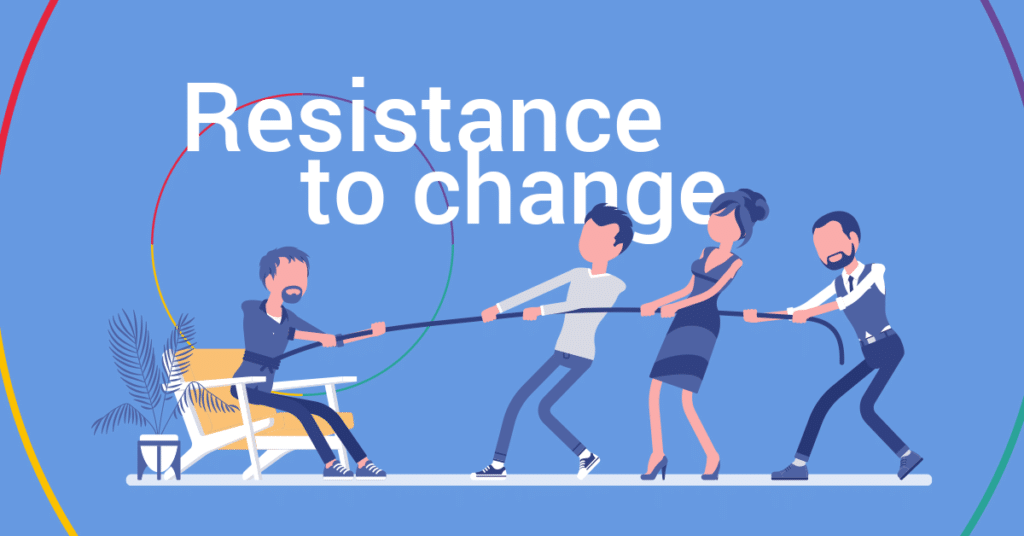
To overcome a foe, one must first understand it. Innovation resistance is not simple stubbornness; it is a complex, often rational, human response to perceived threat. It manifests in two primary forms: active resistance (voiced objections, sabotage) and passive resistance (silent avoidance, minimal compliance). Both are rooted in several core areas.
A.1. The Psychological Underpinnings: Fear and the Human Brain
At its core, the human brain is wired for efficiency and predictability. The prefrontal cortex, responsible for complex thought and learning, consumes a significant amount of energy. When faced with a new process or tool, it must work overtime, creating cognitive drain. This naturally leads to a preference for the familiar, a state known as “status quo bias.”
A. The Fear of the Unknown: The most potent driver of resistance is ambiguity. When employees do not understand how an innovation will affect their daily routines, job security, or social standing within the team, their minds naturally gravitate towards worst-case scenarios. This uncertainty triggers the amygdala, the brain’s threat detection center, initiating a fight-or-flight response. This is not a logical process but a primal one.
B. The Fear of Incompetence (The “Learning Curve” Anxiety): People take pride in their expertise. Years of mastering a particular system or process provide a sense of value and identity. Innovation threatens to render that hard-earned competence obsolete, pushing individuals back to a beginner’s mindset. The question “Will I be able to learn this?” is quickly followed by the more terrifying, “If I can’t, what happens to my job?”
C. The Fear of Loss (Sunk Cost Fallacy): Employees and managers alike have invested time, emotion, and effort into the current way of doing things. Admitting that a new system is better can feel like invalidating their past contributions. This “sunk cost fallacy” makes them cling to outdated methods simply because they have a history with them.
A.2. The Organizational Architecture: When Structure Stifles Progress
Beyond individual psychology, the very design of an organization can institutionalize resistance.
A. Rigid Hierarchies and Siloed Departments: In traditional, top-down structures, information and directives flow slowly. An innovation conceived in the C-suite may be perceived as an out-of-touch decree by the time it reaches the operational level. Furthermore, siloed departments often have conflicting goals and metrics; what benefits the IT department might create more work for the sales team, leading to inter-departmental friction.
B. Incompatible Legacy Systems: The technological debt of an organization is a massive barrier. Integrating a sleek, new AI-powered analytics platform with a 20-year-old database system can be a nightmare of compatibility issues, creating immediate and justifiable resistance from the IT staff who have to manage the chaos.
C. Misaligned Incentive and Reward Systems: This is arguably the most critical structural failure. If an organization preaches innovation but continues to exclusively reward employees for flawlessly executing old processes, it is actively incentivizing resistance. Why would an employee spend extra hours learning a new software if their annual bonus is solely based on their performance with the old one?
A.3. The Poor Innovation Rollout: Creating Resistance Through Communication Failures
Often, the innovation itself is sound, but the method of introduction is so flawed that it guarantees failure.
A. The “Surprise Attack” Launch: When leadership develops an innovation in secret and then springs it on the organization as a fait accompli, it sends a clear message: “We don’t trust you with this, and your input isn’t valued.” This immediately creates an “us vs. them” dynamic.
B. Lack of Transparency and Vision: Employees need to understand the “Why.” If the rationale behind a change is not communicated clearly, consistently, and compellingly, they will invent their own narratives, which are often negative. A vision of a more efficient, less stressful, or more competitive future must be painted vividly and repeatedly.
C. Inadequate Training and Support: Providing a new tool without comprehensive, role-specific training is a recipe for frustration and abandonment. Support must be ongoing, accessible, and patient, acknowledging that the learning process is fraught with mistakes.
B. The Champions and The Saboteurs: Mapping the Landscape of Stakeholders
Not all resistance is equal, and not all supporters are equally valuable. Understanding the different actor types within your organization is crucial for a targeted strategy. We can categorize them using a classic diffusion of innovation framework.
A. The Innovators (~2.5%): These are your technology enthusiasts and visionaries. They are the first to experiment with new tools and are crucial for initial testing and feedback. They are risk-takers and require little persuasion.
B. The Early Adopters (~13.5%): These are the respected opinion leaders within the organization. They are not just techies; they are seen as pragmatic and successful. Winning their buy-in is essential, as they will become your most credible evangelists, influencing the larger majority.
C. The Early Majority (~34%): This pragmatic group adopts new ideas just before the average person. They are persuaded by the success stories of the Early Adopters. They need evidence of practical utility and reliable support before they commit.
D. The Late Majority (~34%): This skeptical group will only adopt an innovation after the majority has already done so. Their adoption is often driven by peer pressure and the increasing necessity to use the new system. They are wary of the “hype” and need significant hand-holding.
E. The Laggards (~16%): These individuals are traditionalists, focused on the “way things have always been.” They may never fully embrace the change and may only adopt it when it is absolutely mandatory or when the old system is completely decommissioned. A strategic decision must be made on how much energy to invest in convincing this group versus managing their transition.
C. The Master Plan: A Step-by-Step Framework for Overcoming Resistance
Knowing the “why” and the “who” leads us to the critical “how.” Overcoming resistance is a deliberate process, not a one-time announcement. Here is a phased framework for success.
C.1. Phase 1: Laying the Groundwork (The Pre-Launch Strategy)
This phase begins long before the innovation is officially introduced.
A. Cultivate a Culture of Psychological Safety: The foundation of all innovation is an environment where employees feel safe to take risks, voice concerns, and make mistakes without fear of punishment or ridicule. Leaders must model this behavior by admitting their own uncertainties and framing failed experiments as learning opportunities.
B. Involve Stakeholders from the Start: Instead of designing in a vacuum, form a cross-functional task force that includes members from the groups most affected by the change. Their early involvement creates a sense of ownership. They can identify potential pitfalls, suggest practical modifications, and act as ambassadors to their peers.
C. Craft a Compelling, Simple Narrative: People connect with stories, not spreadsheets. Develop a clear narrative that answers three questions:
-
The “Burn Platform”: Why is the current situation unsustainable? (e.g., “Our competitors are automating, and our manual process is causing us to lose clients.”)
-
The Vision: Where are we going? (e.g., “This new CRM will free up 10 hours a week for our sales team to build relationships, not just input data.”)
-
The Path: How will we get there together? (e.g., “We will provide tiered training, a dedicated support hotline, and celebrate our milestones.”)
C.2. Phase 2: Executing the Launch (The Implementation Playbook)
The rollout is where your preparation meets reality.
A. Communicate Relentlessly and Multi-Directionally: Use every channel available town halls, emails, team meetings, intranet articles, and one-on-ones. The message must be consistent but tailored to different audiences. Crucially, communication must be two-way; create formal and informal channels for feedback and act on it visibly.
B. Empower Your Early Adopters: Give your Early Adopters the platform, resources, and recognition to share their success. A testimonial video from a respected sales director about how the new software helped them close a big deal is far more powerful than a memo from the CEO.
C. Provide Superior, Role-Specific Training: Move beyond generic tutorials. Offer training sessions tailored to different job functions (e.g., “Advanced Reporting for Managers” and “Daily Essentials for Frontline Staff”). Make it scenario-based and hands-on. Record all sessions for on-demand access.
D. Implement Support Systems and Quick-Win Incentives: Establish a dedicated, responsive help desk. Create a “gamified” element by offering small rewards or recognition for the first teams to achieve proficiency or identify creative uses for the new tool. Celebrate these quick wins publicly to build momentum.
C.3. Phase 3: Ensuring Long-Term Adoption (The Sustenance Model)
The goal is not initial use; it is ingrained adoption.
A. Iterate Based on Feedback: The launch is not the end. Actively collect user feedback and be transparent about the updates and improvements you are making as a result. This proves that leadership is listening and that the innovation is a living, evolving entity that they can shape.
B. Align Metrics and Rewards: This is non-negotiable. Review your performance management and reward systems. Are you bonus structures, promotions, and recognition programs aligned with the new behaviors the innovation requires? If not, adjust them immediately.
C. Lead with Empathy and Patience: Acknowledge that the transition is difficult. Leaders must be visible, walking the floor, asking how people are coping, and sharing their own learning journey. This humanizes the process and reinforces psychological safety.
D. Beyond Theory: Real-World Case Studies in Triumph and Failure
Case Study 1: Microsoft’s Shift to Cloud and Azure
In the early 2010s, Microsoft was a company known for its proprietary software like Windows and Office. The cloud revolution, led by Amazon’s AWS, threatened its core business. Internally, there was immense resistance from teams whose identities and success metrics were tied to selling software licenses. Under CEO Satya Nadella, Microsoft executed a masterclass in overcoming innovation resistance. He championed a new culture of “growth mindset,” explicitly encouraging learning from failures. He reorganized the company to break down silos between the Windows and Cloud divisions. Most importantly, he radically altered the incentive structure, tying executive and team compensation directly to the growth of cloud services rather than just software sales. This alignment of vision, culture, and rewards transformed Microsoft into a cloud powerhouse, with Azure now challenging AWS for market leadership.

Case Study 2: The Failure of Google Glass
Contrast Microsoft’s success with the high-profile failure of Google Glass. While a technological marvel, Google faced insurmountable public and internal resistance. The “surprise” launch created a media frenzy but also a massive privacy backlash (“glassholes”). The high price point and lack of a clear, compelling use-case for the average consumer left early adopters isolated. There was no narrative that explained “why” the average person needed this device. Furthermore, developers were hesitant to build apps for a platform with an uncertain future. The resistance, born from poor communication, privacy fears, and a missing value proposition, was so potent that Google had to pull the consumer version and completely reposition the product for enterprise and industrial applications.
E. The Future-Proof Organization: Building an Unstoppable Culture of Innovation
Ultimately, the goal is to move from constantly “overcoming resistance” to building an organization where adaptability and intelligent risk-taking are the default. This requires embedding innovation into your company’s DNA.
A. Make Continuous Learning a Core Value: Invest heavily in ongoing L&D programs. Encourage job rotations, sponsor online courses, and host internal “innovation hackathons” where employees can solve real company problems with new technologies.
B. Decentralize Decision-Making: Empower teams at all levels to experiment and make small-scale decisions. This distributes the responsibility for innovation and dramatically increases the organization’s collective agility.
C. Normalize and Analyze Failure: Institute blameless post-mortems for projects that don’t meet expectations. The focus should be on “What did we learn?” rather than “Who is to blame?” This systematically de-risks the act of trying new things.
In conclusion, overcoming innovation resistance is the definitive business challenge of our time. It is a multifaceted endeavor that demands a deep understanding of human psychology, organizational design, and strategic communication. It is not about forcing compliance but about inspiring adoption. By moving beyond a purely technological focus and embracing a human-centric, phased approach building psychological safety, involving stakeholders, crafting a powerful narrative, empowering champions, and aligning rewards leaders can dismantle the barriers to progress. The organizations that master this discipline will not only survive the waves of change but will learn to ride them, harnessing the full, transformative power of their people to shape the future.