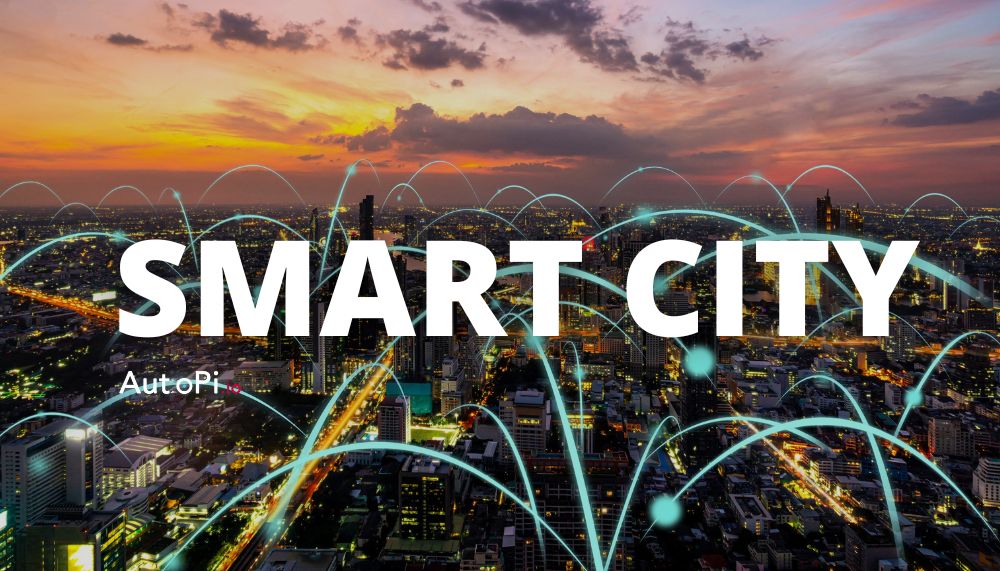
The 21st century is witnessing a profound demographic shift: the great urban migration. By 2050, it is projected that nearly 70% of the world’s population will reside in urban areas. This unprecedented concentration of people presents a dual challenge of immense complexity and opportunity. How do we manage the strain on resources, infrastructure, and environment while simultaneously enhancing the quality of life for billions? The answer is being forged in the crucible of innovation, giving rise to the concept of the “smart city.” More than just a buzzword, the smart city represents a fundamental reimagining of urban life, leveraging cutting-edge technology to create ecosystems that are not only efficient and sustainable but also responsive, inclusive, and resilient. This article provides a detailed forecast for the key innovations set to redefine our urban landscapes by 2025, offering a glimpse into the future of city living.
A. The Foundational Layer: The Invisible Backbone of Future Cities
Before we can appreciate the visible applications, we must understand the underlying digital fabric that makes everything possible. The smart city of 2025 will be built upon a deeply integrated stack of foundational technologies.
A.1. The Pervasive Web of Sensors and the Internet of Things (IoT)
The true nervous system of a future city is its vast, interconnected network of IoT sensors. These are not merely devices; they are the city’s sensory organs. Imagine a city that can feel, hear, and see its own state in real-time. We are moving beyond simple smart meters to a world where:
-
Infrastructure Sensors: Embedded in bridges, roads, and buildings, these monitors constantly assess structural health, detecting stress, corrosion, and potential failures long before they become catastrophic.
-
Environmental Monitors: A dense grid of air quality, water quality, and noise pollution sensors provides hyper-local data, enabling dynamic responses to environmental hazards.
-
Waste Management Sensors: Smart bins communicate their fill-levels, optimizing collection routes, reducing fuel consumption, and eliminating overflow.
By 2025, this sensor web will be so dense and integrated that it will generate a continuous, high-resolution data stream of the city’s vital signs, forming the basis for all intelligent decision-making.
A.2. The Conduit of Speed: Ubiquitous 5G and Advanced Connectivity
The colossal data generated by billions of sensors requires a circulatory system of unparalleled speed and capacity. 5G networks, and the early research into 6G, are that system. Their impact is transformative due to three key characteristics:
-
Enhanced Mobile Broadband (eMBB): This provides the gigabit-speed internet that powers seamless public Wi-Fi, immersive augmented reality experiences for tourists and citizens, and high-definition video streaming from municipal cameras for public safety.
-
Ultra-Reliable Low-Latency Communication (URLLC): This is critical for applications where a delay of a millisecond is unacceptable. It enables real-time control of autonomous vehicle fleets, remote surgery in smart hospitals, and precise control of industrial robotics.
-
Massive Machine-Type Communication (mMTC): This facet is designed specifically to connect the enormous number of IoT devices efficiently, managing the data from countless sensors without network congestion.
The rollout of 5G in dense urban centers will be largely complete by 2025, acting as the indispensable glue that binds all other smart city components together.
A.3. The Urban Brain: Artificial Intelligence and Big Data Analytics
Data, in its raw form, is noise. Artificial Intelligence (AI) and machine learning are the cognitive engines that transform this data into insight and action. The “city brain” platform will become standard operating software for metropolitan management. Its functions will include:
-
Predictive Analytics: AI models will predict traffic congestion hours before it forms, allowing for preemptive adjustment of traffic light patterns. They will forecast energy demand spikes, enabling better grid management, and even identify areas at high risk for crime or public health issues.
-
Computer Vision: AI-powered analysis of video feeds from city cameras will automate tasks like identifying traffic accidents, detecting unauthorized parking, and monitoring crowd density during large events for security purposes.
-
Natural Language Processing (NLP): City-wide AI assistants, accessible via voice or text, will become the primary interface for citizens to report issues, access services, and get information, making governance more accessible.
A.4. The Ledger of Trust: Blockchain for Transparent Governance
While often associated with cryptocurrency, blockchain’s potential for creating secure, transparent, and tamper-proof systems is invaluable for city administration. By 2025, we will see pilot programs and early adoption in several key areas:
-
Digital Identity: Citizens could have a self-sovereign digital ID on a blockchain, simplifying access to all government services from voting and taxes to healthcare and welfare while giving individuals control over their personal data.
-
Supply Chain Transparency: From tracking the origin of food in city markets to ensuring the provenance of materials used in public construction, blockchain can create an unbreakable chain of custody.
-
Secure Record Keeping: Property titles, business licenses, and other critical civic records can be stored on a blockchain, drastically reducing fraud and bureaucratic delays.
B. Tangible Transformations: How Citizens Will Experience the Smart City
The true test of these foundational technologies is how they tangibly improve the daily lives of urban dwellers. The following sectors are poised for the most visible transformation by 2025.
B.1. The Mobility Revolution: Reimagining Urban Transit
The way we move through cities is on the cusp of its greatest change since the invention of the automobile. The 2025 urban transit landscape will be characterized by multi-modality, autonomy, and intelligence.
-
Integrated Mobility-as-a-Service (MaaS): Citizens will increasingly abandon car ownership in favor of MaaS platforms. A single app will allow a user to plan and pay for a journey that combines an e-scooter for the first mile, a shared autonomous shuttle for a main arterial route, and a bike-share for the final mile. This seamless integration is the key to reducing private car reliance.
-
The Rise of Autonomous Vehicles (AVs): While fully autonomous personal cars may still be scaling, 2025 will see the proliferation of low-speed AVs in controlled environments. Think autonomous shuttles in business districts, university campuses, and airports, as well as self-driving delivery robots navigating sidewalks.
-
Smart Traffic Management: AI-powered traffic signals will no longer operate on pre-set timers. They will dynamically adapt in real-time to current traffic conditions, prioritizing emergency vehicles and public transit to ensure fluid movement. Smart parking systems will guide drivers directly to available spots, eliminating circling and congestion.
B.2. Sustainability and Resilience: Building Cities in Harmony with Nature
The climate crisis demands that future cities be designed as sustainable, closed-loop systems. Innovation in 2025 will focus on making urban areas not just efficient, but actively regenerative.
-
Energy Positive Districts: New urban developments will be designed to generate more energy than they consume. This will be achieved through building-integrated solar panels, advanced geothermal systems, and micro-wind turbines. Smart grids will then intelligently distribute this renewable energy, balancing load and storing excess in community battery systems.
-
Circular Water Management: The era of using potable water to flush toilets and water lawns will end. Smart cities will implement advanced greywater and rainwater recycling systems at the district level. Sensors will detect leaks in the water mains instantly, preserving this precious resource.
-
Vertical and Urban Farming: To reduce food miles and increase resilience, hydroponic, aeroponic, and aquaponic farms will be integrated into the urban fabric—in repurposed warehouses, on rooftops, and even on the sides of buildings. This provides fresh, local produce and improves air quality.
B.3. Digital Governance and Civic Engagement: The City as a Platform
The relationship between citizens and their government is being fundamentally rewired. The smart city of 2025 will function as an open platform for participation and co-creation.
-
AI-Powered Public Services: Citizens will interact with 24/7 AI chatbots for routine inquiries and service requests, freeing up human officials for complex cases. These systems will become increasingly sophisticated, understanding context and providing proactive support.
-
Participatory Budgeting and Planning: Platforms will allow residents to directly propose and vote on how a portion of the municipal budget is spent, fostering a stronger sense of community ownership. Augmented Reality (AR) apps will let people visualize proposed new buildings or parks in their actual location before they are built.
-
Open Data Portals: Cities will increasingly make non-sensitive data publicly available. This transparency not only holds government accountable but also empowers entrepreneurs, researchers, and citizens to build their own applications and find novel solutions to urban challenges.
B.4. The Evolution of the Built Environment: Smart Buildings and Districts
The very bricks and mortar of the city are becoming intelligent. Smart buildings are evolving into interconnected ecosystems that optimize the experience for occupants while minimizing environmental impact.
-
Predictive Building Management: Building Management Systems (BMS) will use AI to predict occupancy patterns, adjusting heating, cooling, and lighting in real-time to maximize comfort and efficiency. They will perform self-diagnostics, predicting maintenance needs before systems fail.
-
Human-Centric Design: Lighting systems will mimic the natural solar cycle to regulate occupant circadian rhythms and improve well-being. Air quality sensors will ensure optimal ventilation, and spaces will be dynamically reconfigurable based on need.
-
Inter-Building Connectivity: Smart buildings will not be siloed. They will communicate with each other and the city grid. For example, a district of commercial buildings could collectively reduce their energy draw during a peak grid demand event, creating a “virtual power plant.”
C. The Inevitable Challenges: Navigating the Road to 2025
This technologically dazzling future is not without its significant hurdles. Proactively addressing these challenges is as important as developing the innovations themselves.
C.1. The Privacy and Surveillance Dilemma
A city blanketed with sensors is, by its nature, a city with immense surveillance potential. The data collected to optimize traffic flow can also be used to track individual movements. Establishing a robust legal and ethical framework is paramount. This includes:
-
Data Anonymization: Mandating that personal data be aggregated and anonymized at the source for most analytical purposes.
-
Clear Data Ownership Laws: Defining who owns the data generated by citizens and how it can be used.
-
Public Oversight: Creating transparent oversight boards with citizen representation to audit the use of surveillance technologies.
C.2. Bridging the Digital Divide
A smart city that only serves its technologically affluent population is a failed city. The risk of creating a new social hierarchy based on digital access is real. Mitigation strategies must be central to all planning:
-
Universal, Affordable Broadband: Treating internet access as a essential public utility, just like water or electricity.
-
Digital Literacy Programs: Ensuring all citizens, especially the elderly and marginalized communities, have the skills to access and benefit from digital services.
-
Inclusive Design: Designing apps and interfaces that are accessible to people with disabilities and available in multiple languages.
C.3. Cybersecurity: Fortifying the Digital Metropolis
The more a city relies on interconnected digital systems, the more attractive a target it becomes for cyberattacks. A breach could paralyze transportation, shut off power, or compromise sensitive data. Building cyber-resilience requires:
-
Zero-Trust Architectures: Implementing security models that assume no entity, inside or outside the network, is automatically trusted.
-
Regular Penetration Testing: Continuously stress-testing city systems by hiring “ethical hackers” to find and patch vulnerabilities.
-
Incident Response Plans: Having robust, well-rehearsed protocols for responding to and recovering from a major cyber incident.

C.4. Financial and Implementation Hurdles
The transition to a smart city requires massive capital investment. The “build it and they will come” model is often insufficient. Successful models will likely involve:
-
Public-Private Partnerships (PPPs): Leveraging private sector investment and innovation while retaining public oversight and equity.
-
Phased, Modular Rollouts: Starting with smaller-scale pilot projects in specific districts to demonstrate value before city-wide implementation.
-
Focus on ROI: Justifying investments not just on technological grounds, but on clear metrics like energy savings, reduced commute times, and improved public health outcomes.
Conclusion: The Human-Centric City of Tomorrow
As we look toward 2025, the trajectory is clear: our cities are becoming vast, interconnected cyber-physical systems. The innovations in IoT, AI, 5G, and sustainability are not merely about automation and efficiency; they are about empowerment. The ultimate goal of the smart city is not to create a sterile, robotic environment, but to build a more livable, equitable, and resilient habitat for humanity. It is about freeing citizens from the burdens of congestion, pollution, and bureaucratic inefficiency, and creating more time for community, creativity, and connection. The challenge ahead is not merely technological it is profoundly human. By navigating the ethical, social, and financial challenges with wisdom and foresight, we can harness these powerful technologies to craft urban futures that are not only smart but also truly wise. The city of 2025 will be a testament to our collective ability to innovate, not just for the sake of technology, but for the sake of a better human experience.