In the contemporary, hyper-competitive digital ecosystem, the term “innovation” has been diluted, often used to describe trivial app updates or minor feature enhancements. However, for enterprises aiming not just to survive but to dominate their markets, true innovation is a disciplined, strategic, and continuous process. It transcends the realm of isolated IT projects and becomes the core organizational heartbeat. Next-generation digital innovation strategies represent a fundamental shift from reactive digitization to proactive, value-driven transformation. This comprehensive guide delves into the sophisticated frameworks, cutting-edge technologies, and cultural metamorphosis required to build a resilient, future-proof organization.
The old paradigm of innovation characterized by annual planning cycles, siloed R&D departments, and a primary focus on incremental efficiency gains is obsolete. It has been rendered ineffective by the velocity of technological change and the disruptive power of agile startups. Next-gen strategies are holistic, ecosystem-oriented, and built upon a foundation of continuous learning and adaptation. They are not about predicting the future but about building organizations that are agile enough to thrive in an unpredictable one.
A. Deconstructing the Core Pillars of Next-Gen Innovation
To move beyond buzzwords, we must first understand the foundational pillars that support a next-generation digital innovation strategy. These are not standalone tactics but interconnected principles that reinforce one another.
A. Human-Centricity and Empathetic Design
At the heart of all meaningful innovation lies a deep, empathetic understanding of human needs, desires, and pain points. This goes far beyond traditional market research.
-
Deep User Empathy: Utilizing techniques like ethnographic studies, journey mapping, and empathy interviews to uncover latent needs—the things users themselves cannot articulate. It’s about understanding the emotional context of a user’s interaction with your product or service.
-
Co-Creation and Community Involvement: Instead of designing for users, innovate with them. Involve your user community, lead customers, and even critics in the ideation and prototyping phases. This not only generates superior ideas but also fosters fierce loyalty and a sense of shared ownership.
-
Personalization at Scale: Leveraging data analytics and AI to deliver unique, tailored experiences to millions of users simultaneously. From Netflix’s recommendation engine to Nike’s bespoke shoe designs, personalization is the ultimate expression of human-centricity in the digital age.
B. Data as a Strategic Asset and Creative Fuel
Data is the lifeblood of digital innovation. However, its next-gen application is not just about retrospective analysis (Business Intelligence) but about prospective, predictive, and prescriptive insights.
-
From Descriptive to Prescriptive Analytics: Moving from “what happened” (descriptive) and “why did it happen” (diagnostic) to “what will happen” (predictive) and “what should we do about it” (prescriptive). This involves advanced machine learning models that can simulate scenarios and recommend optimal actions.
-
Data Democratization: Empowering employees across all departments not just data scientists with access to user-friendly analytics tools and clean, reliable data. When a marketing manager or a customer service agent can run their own queries and uncover insights, innovation can sprout from anywhere within the organization.
-
Ethical Data Stewardship: In an era of increasing privacy concerns and regulations like GDPR and CCPA, ethical data handling is a competitive advantage. Transparency about data collection and usage builds trust, and trust is the currency of the digital economy.
C. Ecosystem Orchestration and Open Collaboration
No company, regardless of its size, can innovate in a vacuum. The myth of the lone genius inventor has been replaced by the reality of the interconnected innovation ecosystem.
-
Strategic Partnerships: Actively forming alliances with startups, academic institutions, research labs, and even competitors (in a “coopetition” model) to access new technologies, skills, and markets. For example, automotive giants partnering with AI firms to develop self-driving technology.
-
API-First Architecture: Building your digital services with open Application Programming Interfaces (APIs) allows for seamless integration with partner services, enabling you to create composite offerings that are more valuable than the sum of their parts.
-
Platform Business Models: Shifting from linear value chains to multi-sided platforms that facilitate interactions between producers and consumers. Think of Apple’s App Store, Airbnb, or Uber. The platform itself doesn’t create all the value; it orchestrates the value creation of its users.
D. Architectural Agility and Technological Fluidity
The ability to pivot quickly is contingent upon a flexible and modern technological foundation. Legacy monolithic systems are the anchor that drags down innovation speed.
-
Cloud-Native Development: Embracing microservices architecture, containers (e.g., Docker), and container orchestration (e.g., Kubernetes) allows development teams to build, deploy, and scale individual components of an application independently. This drastically reduces development cycles and improves system resilience.
-
Composable Technology Stacks: Building your digital capabilities with modular, best-of-breed solutions that can be easily assembled and reassembled to meet changing business needs. This “Lego-block” approach prevents vendor lock-in and fosters adaptability.
-
Low-Code/No-Code Platforms: Enabling “citizen developers” business users with domain expertise but no formal coding skills to build applications and automate workflows. This unburdens the IT department and accelerates digital solution development across the business.
B. Implementing a Next-Gen Innovation Operating Model
Understanding the pillars is one thing; embedding them into your organization’s operating model is another. This requires a structured yet flexible approach to managing the innovation pipeline.
A. The Three-Horizon Model of Portfolio Management
A balanced innovation portfolio manages initiatives across three time horizons:
-
Horizon 1: Optimize the Core: Initiatives focused on improving existing products, services, and processes. The goal is to extend the profitability and relevance of your current business model. (e.g., enhancing the checkout process on your e-commerce site).
-
Horizon 2: Expand the Adjacent: Initiatives that take existing capabilities into new markets or apply them to new customer segments. This involves building new businesses that are related to the core. (e.g., a bank launching a digital wealth management platform for its existing customers).
-
Horizon 3: Create the Transformative: Initiatives focused on discovering fundamentally new business models and disruptive opportunities. These are high-risk, high-reward bets that may become your core business in 5-10 years. (e.g., a pharmaceutical company exploring AI-driven drug discovery).
A common failure is over-investing in Horizon 1. A next-gen strategy allocates dedicated resources and talent to all three horizons, accepting that Horizon 3 will have a high failure rate but is essential for long-term survival.

B. The Hybrid Innovation Framework: Combining Agile and Stage-Gate
While Agile is excellent for development speed, large organizations still require governance. A hybrid model, often called “Agile-Stage-Gate,” provides the best of both worlds.
-
Structured Ideation and Discovery: A formal stage for generating and validating ideas using lean startup methodologies like business model canvassing and rapid prototyping.
-
Agile Development Sprints: Once an idea is validated and funded, cross-functional “tiger teams” use Agile sprints to build the Minimum Viable Product (MVP) and iterate based on user feedback.
-
Governance Checkpoints (Stage-Gates): Key decision points where leadership reviews progress, assesses continued market fit, and decides whether to pivot, proceed, or kill the project. These gates are based on empirical data, not just opinions.
C. Fostering an Intrapreneurial Culture and Talent Ecosystem
Strategy and process are futile without the right people and culture. The goal is to create an environment where “intrapreneurs” entrepreneurial employees can thrive.
-
Psychological Safety: Cultivating an environment where employees feel safe to experiment, challenge assumptions, and fail without fear of blame or retribution. Failure is treated as a learning opportunity, not a career-limiting event.
-
Autonomy and Empowerment: Giving cross-functional teams the autonomy to make decisions about their projects. This requires leaders to act as facilitators and coaches who remove roadblocks, rather than as micromanagers who dictate tasks.
-
Continuous Learning and Upskilling: Implementing robust L&D (Learning and Development) programs focused on future skills like data literacy, design thinking, and AI fundamentals. The half-life of skills is shrinking, and continuous education is non-negotiable.
C. Leveraging Exponential Technologies as Innovation Catalysts
Next-generation strategies are often powered by a specific set of exponential technologies. Understanding their potential and application is critical.
A. Artificial Intelligence and Machine Learning: The Intelligent Core
AI is the defining technology of our time, moving beyond automation to become a source of creativity and strategic insight.
-
Generative AI: Tools like GPT-4 and DALL-E are revolutionizing content creation, software coding, and product design. They can act as a co-pilot for innovators, generating novel ideas, drafting marketing copy, and even writing code snippets.
-
Hyper-Personalization Engines: AI algorithms analyze user behavior in real-time to dynamically adjust website content, product recommendations, and marketing messages, creating a one-to-one marketing experience.
-
Predictive Maintenance and Operations: In manufacturing and logistics, AI models predict equipment failures before they happen and optimize supply chain routes for efficiency and cost savings, creating a “self-healing” operation.
B. The Immersive Continuum: Augmented and Virtual Reality
AR and VR are merging the physical and digital worlds, creating new frontiers for customer engagement and operational workflows.
-
Virtual Prototyping and Design: Automotive and aerospace companies use VR to design and test new vehicles in a fully immersive digital environment, saving millions in physical prototyping costs.
-
Augmented Customer Experiences: Furniture retailers like IKEA use AR to let customers visualize how a product will look in their home. Cosmetic brands offer virtual try-ons for makeup.
-
Remote Assistance and Training: A field technician wearing AR glasses can receive real-time visual guidance from an expert located thousands of miles away, overlaying digital instructions onto the physical equipment they are repairing.
C. Blockchain and Web3: Architecting Trust and Decentralization
While often associated with cryptocurrency, the underlying distributed ledger technology has profound implications for innovation.
-
Supply Chain Transparency and Provenance: Blockchain creates an immutable record of a product’s journey from raw material to end consumer, verifying authenticity and ethical sourcing for items like diamonds, pharmaceuticals, and organic food.
-
Decentralized Identity and Data Ownership: Empowering users to own and control their digital identities and personal data, moving away from the current model where large tech companies are the de facto custodians.
-
Smart Contracts for Automated Governance: Self-executing contracts that automatically trigger actions when predefined conditions are met, reducing friction, cost, and the need for intermediaries in everything from insurance claims to royalty payments.
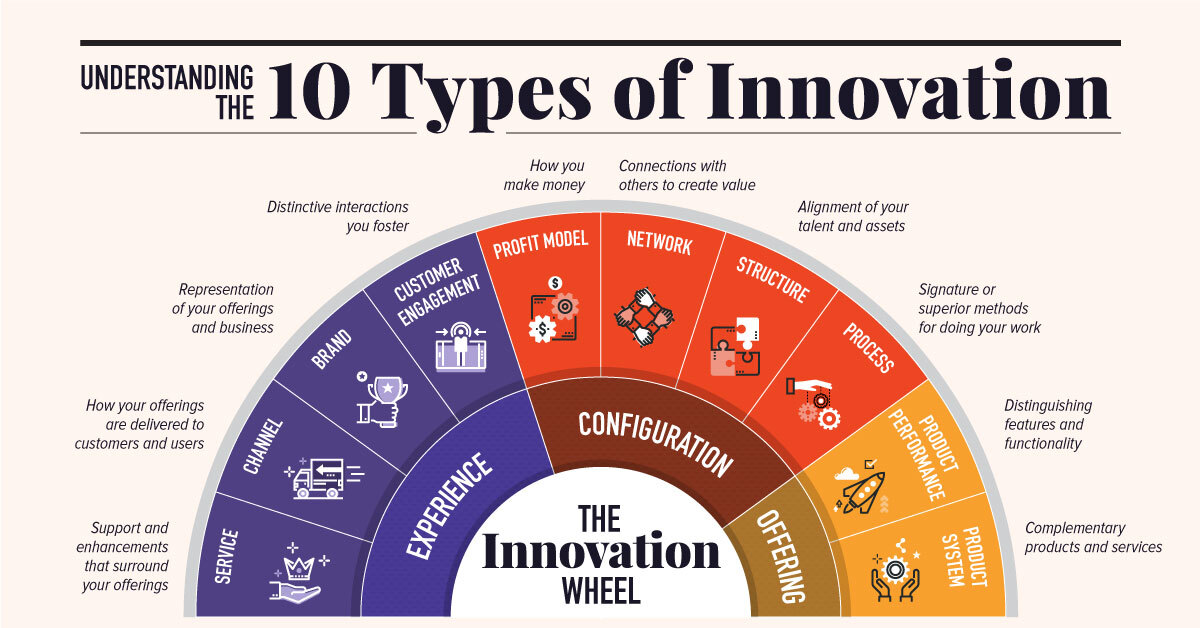
D. Measuring What Truly Matters: Beyond ROI
The success of a next-generation innovation program cannot be measured by traditional ROI alone. A more nuanced set of Key Performance Indicators (KPIs) is required.
-
Innovation Pipeline Strength: The number and quality of ideas moving through your Horizon 1, 2, and 3 pipeline.
-
Speed to Market / Cycle Time: The average time from ideation to launch. A primary indicator of organizational agility.
-
Impact Ratio: The percentage of revenue derived from products or services launched in the last 3-5 years.
-
Employee Engagement in Innovation: The number of employees participating in innovation challenges, hackathons, or submitting ideas.
-
Learning Velocity: The rate at which validated learnings about customers and markets are generated, even from failed experiments.
Conclusion: The Never-Ending Journey of Reinvention
Adopting a next-generation digital innovation strategy is not a one-time project with a definitive end date. It is a continuous, organization-wide commitment to reinvention. It demands a symbiotic alignment of empathetic human-centered design, a fluid and powerful technological foundation, a culture that celebrates calculated risk-taking, and a strategic portfolio that balances the present with the future.
The businesses that will lead the next decade are those that stop viewing innovation as a discrete department and start embracing it as a pervasive capability a cultural ethos that empowers every employee to be a change agent. The journey is complex and demands relentless focus, but the alternative irrelevance in the face of relentless change is simply not an option. The time to architect your future is now.